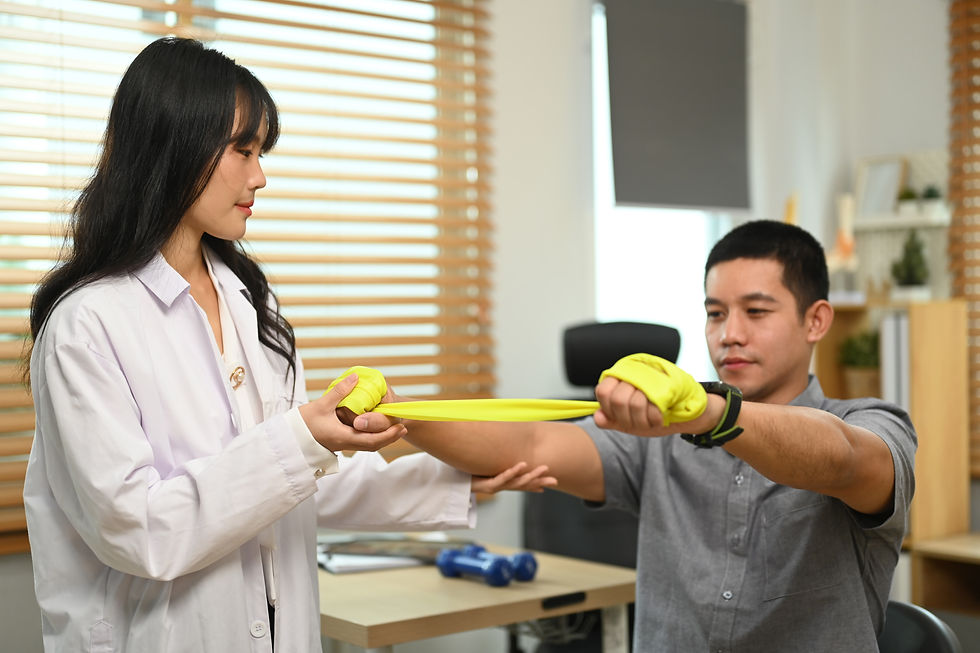
Recovering After Knee or Shoulder Surgery With Water and Land-Based Physiotherapy

Recovering after knee or shoulder surgery is rarely just about doing exercises. It is about helping the body move safely again, rebuilding confidence, and gradually returning to the activities that matter in daily life.
Some days may feel encouraging. Other days may bring stiffness, swelling, tiredness, discomfort, or hesitation with movement. This is why post-surgical physiotherapy should be planned around your healing stage, surgeon’s advice, wound healing where relevant, pain response, mobility, strength, and personal rehabilitation goals.
At AquaPhysio Rehab Centre in Camden Medical Centre, Orchard, recovery after knee or shoulder surgery may involve land-based physiotherapy, water-based physiotherapy, or a combination of both where appropriate. The plan is guided by physiotherapist assessment, safety, comfort, and how your body responds over time.
Starting With a Clear Assessment
Before deciding whether rehabilitation should begin on land, in water, or through a combined approach, your physiotherapist will first need to understand your current condition. This helps ensure that each part of your rehabilitation plan has a clear purpose.
Your physiotherapist may assess:
Range of movement
Pain or discomfort response
Swelling, stiffness, or sensitivity
Strength and muscle activation
Walking, reaching, or functional ability
Posture, balance, and movement control
Wound healing where relevant
Surgical precautions and medical advice
Confidence with movement and daily tasks
This assessment helps identify what your body is ready for. For some patients, the first goal may be gentle mobility. For others, it may be walking quality, shoulder control, balance, muscle activation, or safe participation in everyday routines.
Land-Based Physiotherapy After Knee Surgery
After knee surgery, land-based physiotherapy is often important because the knee needs to manage body weight during daily movement. Walking, standing, climbing stairs, sitting down, rising from a chair, and changing direction all place practical demands on the knee.
Land-based physiotherapy may help your physiotherapist observe how your knee works together with the hip, ankle, back, and surrounding muscles. This matters because patients may sometimes limp, avoid weight on one side, rely more on the opposite leg, or compensate through the lower back without realising it.
Depending on your stage of recovery, land-based sessions may include:
Knee mobility exercises
Quadriceps and leg muscle activation
Hip and lower limb strengthening
Balance and posture training
Walking practice
Sit-to-stand training
Step and stair preparation
Education on pacing daily activities
The goal is not only to improve the knee in isolation. It is to help the whole body move with better control, confidence, and safety during daily life.
Land-Based Physiotherapy After Shoulder Surgery
Shoulder surgery recovery often needs careful progression. The shoulder is closely connected to the neck, upper back, ribs, and shoulder blade, so physiotherapy may look beyond the surgical area to understand how the upper body is moving as a whole.
Depending on your surgical precautions and recovery stage, land-based physiotherapy may include:
Guided shoulder mobility
Postural education
Shoulder blade control
Gentle muscle activation
Reaching practice
Gradual strengthening where appropriate
Guidance for sleeping, dressing, reaching, and carrying
This stage should be paced carefully. Moving too little may affect confidence and mobility, while doing too much too soon may make symptoms more irritable. Your physiotherapist can help you understand what your shoulder is ready for and how to progress in a way that respects healing.
Where Water-Based Therapy May Support Recovery
Water-based therapy may be introduced when it is medically suitable and clinically useful. Before entering the pool, your physiotherapist may consider wound healing, infection risk, skin condition, medical clearance where needed, and whether you can enter and exit the pool safely.
For knee surgery recovery, water may allow selected walking, stepping, balance, and mobility exercises to be practised with reduced load through the lower limbs. This may be helpful for some patients who are not yet ready for higher-load land-based activity but still need to begin active movement.
For shoulder surgery recovery, water may support selected arm movements in a controlled environment where appropriate. The support of water may help some patients move with more confidence, while the natural resistance of water can be used for controlled strengthening when suitable.
Water-based therapy may support selected goals such as:
Gentle mobility
Controlled walking or stepping practice
Balance and coordination
Gradual strengthening
Movement confidence
Lower-impact conditioning
However, water-based therapy is not passive or effortless. Gravity is still present in the pool, especially when exercises are performed standing upright or floating upright. The body continues to work on posture, balance, coordination, muscle control, and effort.
Why Water and Land Work Together
Water-based therapy can be useful during selected stages of recovery, but it does not replace land-based physiotherapy. This is because daily life happens outside the pool.
A recovering knee needs to manage walking, stairs, standing, sitting, and changes in direction. A recovering shoulder needs to manage reaching, dressing, lifting suitable objects, working, and self-care tasks. These real-life movements happen on land, where the body must manage gravity, balance, strength, and body weight.
This is why water-based therapy should be seen as part of a wider rehabilitation plan rather than the full recovery journey. The pool may provide a supported setting for selected movements. Land-based physiotherapy helps translate movement into practical daily function.
For some patients, rehabilitation may begin mainly on land. For others, water-based therapy may be introduced first, added later, or used alongside land-based care for a period of time. The best approach depends on the surgery, safety considerations, symptoms, confidence, and goals.
Recovery May Change From Week to Week
Post-surgical recovery does not always move in a straight line. Swelling, stiffness, fatigue, discomfort, sleep, activity levels, and confidence can all affect how your body responds.
Your physiotherapist may adjust your plan if you experience:
Increased pain or swelling
Higher fatigue after sessions
Reduced confidence with movement
Poor balance or movement control
Difficulty completing exercises safely
Increased guarding or hesitation
Changes in wound healing
New advice from your surgeon or doctor
This does not mean recovery has gone backwards. It means the plan is being adjusted to match your body’s current response. A good physiotherapy plan should be flexible enough to progress when your body is ready and adapt when your body needs more time.
Supporting Your Next Step After Surgery
Recovering after knee or shoulder surgery is about more than completing a routine. It is about rebuilding movement, confidence, and function in a way that is safe, realistic, and personalised.
Land-based physiotherapy helps connect rehabilitation to everyday life. Water-based therapy may provide a supported environment for selected movements when suitable. Together, they may support different stages of recovery while keeping the focus on your individual needs.
At AquaPhysio Rehab Centre in Camden Medical Centre, Orchard, physiotherapy after knee or shoulder surgery is shaped around your procedure, healing stage, safety needs, comfort, and personal goals. A physiotherapy assessment can help determine whether land-based care, water-based therapy, or a combined approach may be suitable for your rehabilitation journey.