

Aquatic vs Land-Based Physiotherapy
Two different rehabilitation settings, each designed to support movement, strength and everyday function in different ways.
Neither environment is automatically better than the other. Each supports movement and rehabilitation differently.
Your physiotherapist will assess your condition and goals before discussing whether aquatic, land-based or combined treatment may be appropriate.


Assessment-Led
Your assessment helps determine an appropriate starting point.

Integrated Rehabilitation
Aquatic and land-based physiotherapy can be combined where appropriate.

Camden Medical Centre
Private heated therapy pool and land-based rehabilitation within the same facility.
How Do Aquatic and Land-Based Physiotherapy Compare?
Water changes how the body is supported.
Land-based rehabilitation helps practise movement under everyday weight-bearing conditions.
At a Glance

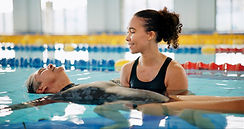
AQUATIC
When It May Be Considered
When pain, stiffness or reduced weight-bearing tolerance makes land-based exercise difficult.

LAND-BASED
When It May Be Considered
For functional strengthening, walking, balance, stair practice and everyday movement.
AQUATIC
How the Body Is Supported
Buoyancy reduces the amount of body weight placed through the joints during selected movements.

LAND-BASED
How the Body Is Supported
Movement takes place under normal gravity and weight-bearing conditions.

AQUATIC
How Resistance Works
Water provides resistance that can be adjusted through movement speed, direction and exercise selection.

LAND-BASED
How Resistance Works
Exercises may use body weight, resistance bands, weights or other equipment where appropriate.

AQUATIC
Rehabilitation Focus
Walking practice, joint movement, balance and gradual strengthening in a supported environment.

LAND-BASED
Rehabilitation Focus
Strength, balance and movement practised in conditions that reflect daily life.

A Coordinated Approach Across Water and Land
-
Your rehabilitation does not always need to remain in one environment. Depending on your assessment and progress, your physiotherapist may use aquatic physiotherapy, land-based physiotherapy or both at different stages.
🫧
.°•
What May You Do in the Therapy Pool?
Your first activities are selected according to your assessment and present movement ability rather than taken from a standard routine. You may practise:

-
Supported standing or weight shifting.
-
Walking, stepping or balance activities.
-
Joint movement or movement-control exercises.
-
Gradual strengthening or resistance activities.
Your Comfort Matters
Tell your physiotherapist if you experience:
Increasing pain, cramping or discomfort around a healing area
Dizziness, unusual breathlessness or excessive tiredness
Anxiety or uncertainty about an activity
Concern that a movement feels unstable or unsafe


What Happens After Your Session?
Your physiotherapist will discuss how you responded and what may be appropriate next. Between appointments, it can be useful to notice:
How your symptoms feel later that day
Whether tiredness continues after the session
Changes in walking, balance or movement confidence
Activities that feel easier or more difficult afterwards
What Makes the AquaPhysio Setting Different?
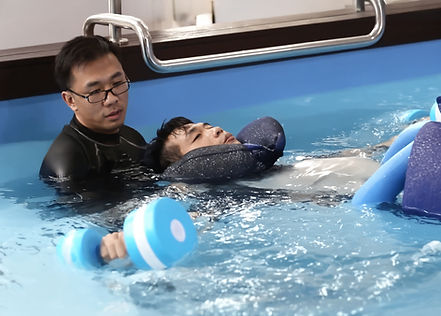
Aquatic physiotherapy at AquaPhysio is provided within a clinical rehabilitation centre, not as a general water exercise class.

Private Heated Therapy Pool
Located at Camden Medical Centre.

One-to-One Sessions
Guided by an AquaPhysio physiotherapist.
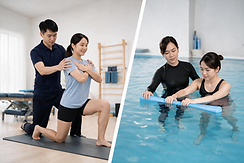
Integrated Facility
Aquatic and land-based physiotherapy within the same centre.
Frequently Asked Questions
Common Concerns Before Starting
Do I need to decide between aquatic and land-based physiotherapy before booking?
No. Your assessment helps determine an appropriate treatment environment.
Do I have to start in the pool?
No. Some people begin on land, others in the pool, depending on their assessment.
Can aquatic and land-based physiotherapy be combined?
Yes, where appropriate. The balance between settings can be reviewed as treatment progresses.
Do I need to know how to swim?
No. The focus is supervised therapeutic movement, not swimming.

Find an Appropriate Starting Point for Your Rehabilitation
Your physiotherapist will assess your movement, medical considerations and goals before discussing whether treatment in the pool, on land or both may be appropriate. Visit AquaPhysio at Camden Medical Centre, Orchard, Singapore.
This page is for general information and does not replace medical advice.